
ghost walker
by Giovanna Lomanto


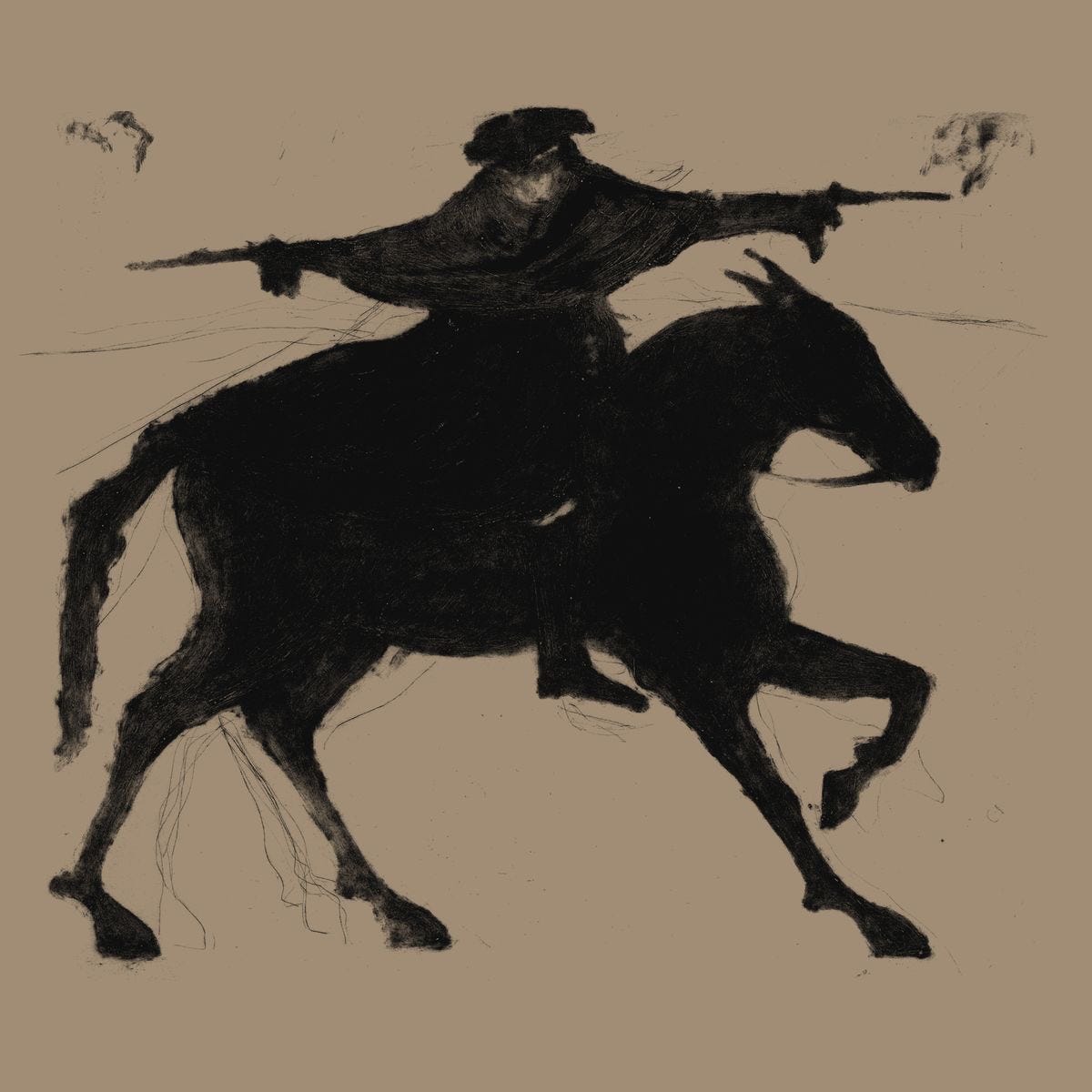
image source unknown
There’s an urban legend—we never truly know how we look. If we were to walk past ourselves in the street, we wouldn’t bat an eye. The mirrors and the cameras only capture so much. A video, a little more. But if we were to be cloned, identically and perfectly, we wouldn’t be able to register our own image.

When I started a life in front of the lens, it happened as coincidence—a friend of mine was a photographer, and I wasn’t too shy to have my photo taken. Slowly, the tale of maker and muse began to take hold. There was a specific beauty in the photos I’d never previously recognized. A ferocity I didn’t know I could hold, and soon enough, all my friends were convinced he was in love with me. The constant vie for my attention, the insistence on service and use. It was a story I was familiar with. I was still in high school, and there was a small selection of men who would do anything I asked. I took it as friendship, duty, the filial piety that came with a sibling. But the voices (women, other men, everyone) were loud. These were all proclamations of love I was too stupid to see, they said to me constant.

Over the course of several years, individual members of the gaggle would one-by-one confess their feelings, their desires for my romantic affection. And each time, I’d be surprised. A first reaction: offense, this hated, vilified lust. How everything had to be reduced to a sex I was forbidden from having. The cross around my neck, the punishment I would wring upon my body. All of it, ignored. I didn’t want to be desired. I wanted to be cared for. I didn’t yet know that love could be both.

Sex was sinful. Lust was the death of all good girls. No holy man would want a tarnished girl, a washed-up plaything. No holy woman could want a woman. The cynicism reached deep into a Catholic bone, so deep that I refused any affection if I didn’t consider the suitor a prospect for holy matrimony. Mistakes would send me back to the wooden booth, curtained and dim, where I whispered my sins, knowing that the priest on the other side knew my voice from mass every week. A shame, a confession, a misdeed.

One by one, I turned down offers for my hand. I had the privilege to be a picky girl. So picky that I found my first match in a town an hour and a half drive from my own. Long distance at 16, before either of us could drive. It was a test, and he passed until he failed. And even when he failed, he called back, regretting his abandonment.

But I was not a woman of hindsight, foresight, or any sight at all. I’d been a tunnel vision girl since the day I was born, hinging my entire core on the passing emotion of any moment. Through the haze, the mirror warped. Nobody in my town wanted me, so I had to travel far. Nobody wanted to keep me, so they hurt me. I felt hurt, was convinced that this hurt would carry through forever, would latch itself to every fiber of my tarnished being, a girl who had fumbled in the dark, who had kept her clothes on, but had failed at holding tight to a crooked beam in the storm cellar.

I wrecked my conscience in the years to follow, hating everything about myself. I wanted to punish a body that could tempt someone to lust, stringing together hypotheticals. He left because I wouldn’t have sex, I told myself over and over again, with no other reason to cite. And so I grew to hate the hips that slowly emerged from a straight-backed posture, the breasts that had always hated the constraints of a caged bra. I starved myself over and over, let my stomach ache in its emptiness. I wanted to be beautiful, young, pre-pubescent. Where love could be uncoupled from a desire for physical touch, when the dirtiest dream someone could have would be a too-long embrace.

In medieval times, fasting girls were praised. Left to be. Worshipped. In modern times, I was institutionalized twice, re-fed at the threat of an impending death, one I had survived on a hospital bed. I fell from grace then, realized I couldn’t be the kind of holy I had killed for. Diagnoses abound, obsessions analyzed, disorders named. A psychosis I’d inherited.

Once set free, I walked like a newborn—shaky legs, a instant need to sprint across the room. The first man who wanted me was older, a housemate, someone who I thought could still be a husband. We spent hours and hours talking, kissing, running our hands over every inch of bare skin. The first time he made a ploy for my nakedness, I stopped him. I told him about my body, how I was still afraid to see it. He told me that it was okay. We could take it slow, steady, whatever pace I wanted.

So we did. After a few weeks, we turned off the lights and fucked. I bled all over the sheets, marking the future failure of a dangerous ritual. My virginity evaporated, the evidence bright red and sprawling. I thought I’d feel more. I thought it would be a grand descent into hell, or a great ascension to an enlightened realm of freedom, womanhood. It was neither, but it was nice to be touched. To have told all my secrets to someone and to have them still ask to see more.

Intoxicating, like my first beer that same week, shared in his company. It didn’t taste as bad as I’d heard it would. The sex didn’t hurt as bad as I heard it would. I walked with numb fingers, reaching for something, reaching for him.

After a few weeks, he started getting busy. I started getting busy. Then I started getting free. He didn’t. After a week of running around a ring, a week of unrecognizable celibacy, he told me that he didn’t want the same promise of exclusivity, that he still hadn’t lined up a job after graduation and how he didn’t want to claim us for any longer than he knew. I could feel the rank sweat of desperation on my body, and rushed out of my clothes for him to taste, hoping it would change his mind. Eventually, the world picked up as normal, and we were back to the same old routine, until an unceremonious departure, the whispered promise of “don’t be a stranger.”

I mourned for months. Months and months I pined and waited, hoping I’d hear a hello, that we’d be back to our late-night conversations behind locked doors, that we could tell our friends about this silly secret we shared. And again, there was a second voice. The shouting. He used you, the brain would scream into the cavernous empty skull.

I met a man who liked me fast. I told everyone I didn’t want a second date with him, but went anyway because I had nothing better to do that night. He was reliably there in a way I hadn’t had since I was sixteen, and so I stayed for a year and a half. Told him I loved him and felt a simmering pity, a negligent disgust for his incompetencies. His sloppy work ethic. The fact that he needed to be prodded to shower. How every success of mine was a threat to his intelligence.

Again, I fell in love with someone in the house. He’d long sworn off women, but we would hold hands in public as a joke, lie down in bed together for hours. Publicly, in front of my then-boyfriend, we signed a marriage pact. 40 and single and we’ll get married, we jested. No, he insisted. 30 and single—and long-term relationships didn’t count. We’d get engaged the second the clock hit. I laughed, shook his hand, and swore I’d make it until then.

Eventually, the boyfriend said I was “too much.” My emotional turbulence, the way I could be soaring one day and breaking down on the door of death the next. And again, the tunnel vision kicked in. I would shrink, I agreed. It lasted approximately a week before I grew tired, and he packed his bags.

Within two weeks, I had a new boyfriend. My secret love didn’t care. The new boyfriend didn’t last. An old flame of mine died. I fell in love again with a woman, saying nothing. A new man appeared from thin air, speaking loud. We started dating. He slept with his ex. When he told me about the decision looming over him, he weighed my pros verbally: “it’s really fun to give you head.” I ushered him out of my house, and we never spoke again.

When I met my soulmate, I had baggage that felt bigger than I could manage. I laid it out for him plain, told him every insecurity, every concern, every condition. It felt like those first nights when I was nineteen and unfurling my body for the first time, saying here’s what’s happened, and will you have me still. The answer was a resounding yes. I learned quickly how love was desire, understanding, care, attention. It was so easy to be loud about love. It was less easy to feel. The dirty, scrounging voice from my childhood still feared abandonment, some horrendous trickery that I was too naïve to sense.

And over and over again, ghouls from the ashes would rise. Asking for another chance, feigning a goodbye to test the waters, anything to remind me of the failings in my tarnished past. I’d rebuff them easily, laughing and swatting the messages away.

But slowly, surely, I find that there’s more to unpack. Memories to dislodge, new pieces of evidence to analyze. A lie unearthed, a pattern acknowledged. In what I had always thought were my failings were the failings of men laid plain, their apologies always started and left unsaid in their attempts at reconnection. I was drunk with a surety I’d never known, a confidence in desirability never before touched. The way I could mark a man like a stain. I cackled thinking of my new two truths and a lie: “I’ve never downloaded a dating app, I’ve never had a one-night stand, and I’ve never gotten back with an ex.”

If I walked by myself in the street, I would never recognize her—of this I’m sure. Still, I still can’t imagine myself as a woman holding the ghosts of men on a leash.
Giovanna Lomanto is a poet, photographer, and artist in Oakland, California. She’s won an award and been nominated for others—and has a few collections of poetry out with small presses. She helps Game Over Books publish cool writers.
 | A guest post by
|